Bunga Font for Small Business Branding
It was a quiet Tuesday morning when I sat down with my coffee and the latest batch of product labels for my handmade candle line. The old font had served me well, but I felt it lacked that certain je ne sais quoi to make my brand stand out. That’s when I discovered Bunga, a modern and bold handwritten script font from Script Amp that transformed my packaging in ways I hadn’t imagined.
Bunga has this effortless charm that feels both personal and professional. It's like finding the perfect penmanship that captures your brand’s voice without trying too hard. As a small business owner, I know how important first impressions are, and typography plays a huge role in shaping those moments. Whether it's on a label, a social media graphic, or a thank-you card, Bunga adds a touch of personality that makes your brand more memorable.
What Makes Bunga Stand Out
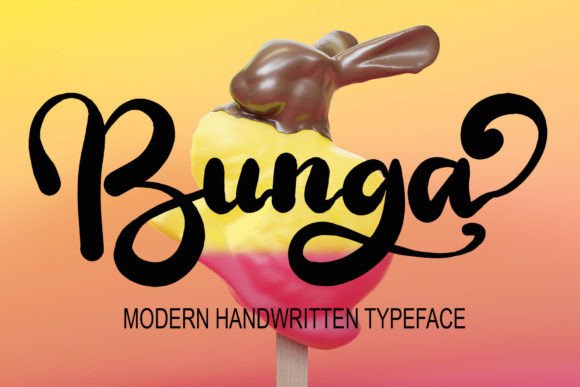
At first glance, Bunga looks like any other script font, but there's something about its curves and spacing that gives it a unique character. It's not overly ornate, nor is it too casual—it strikes a balance between elegance and approachability. This makes it incredibly versatile for different applications. I used it on my candle jars, and it gave them a refined yet friendly feel that matched my brand’s identity perfectly.
The font has a confident rhythm to it, which makes it great for headlines or display text. It doesn't get lost on a page, even when paired with simpler fonts. I paired it with a clean sans serif for my website banners, and it created a nice contrast that made the content pop while keeping the design cohesive.
Real-World Applications for Bunga
Since discovering Bunga, I've been using it across various branding elements. On my online shop, I updated the product titles with Bunga, and it immediately made the shop feel more curated and intentional. The same goes for my Instagram templates—I now use it for promotional posts, and it helps create a consistent visual language that my followers have come to expect.
For printed materials, I found that Bunga works beautifully on larger formats like menus and thank-you cards. However, I did take care to ensure that the text remained readable at smaller sizes, especially for labels and tags. A good rule of thumb is to use Bunga for short phrases or headlines rather than long paragraphs where readability is key.
I also tested it on my boutique’s tags and found that it added a soft, handcrafted touch that aligned with the brand's aesthetic. It didn’t feel too formal, which was exactly what I wanted for a more approachable customer experience.
Font Pairing Tips for Small Businesses
One of the best things about Bunga is how well it pairs with other fonts. If you're looking for a clean contrast, try pairing it with a modern sans serif like Montserrat or Lato. For a more elegant look, go with an elegant serif like Playfair Display or Georgia. These combinations can help you achieve a balanced and professional design without sacrificing style.
When using Bunga in digital spaces, it's important to check the file formats and ensure that it supports all the characters you need. I made sure to review the included styles, ligatures, and alternates before finalizing my designs. Also, if you plan to use the font for commercial purposes—like printing products or creating downloadable assets—double-check the licensing terms to avoid any issues down the line.
As someone who runs a small business, I know that every detail matters. From the fonts we choose to the colors we use, everything contributes to how our brand is perceived. Bunga has helped me elevate my brand's visual identity in a way that feels authentic and polished. It's not just a font; it's a tool that helps tell your story in a more engaging and memorable way.